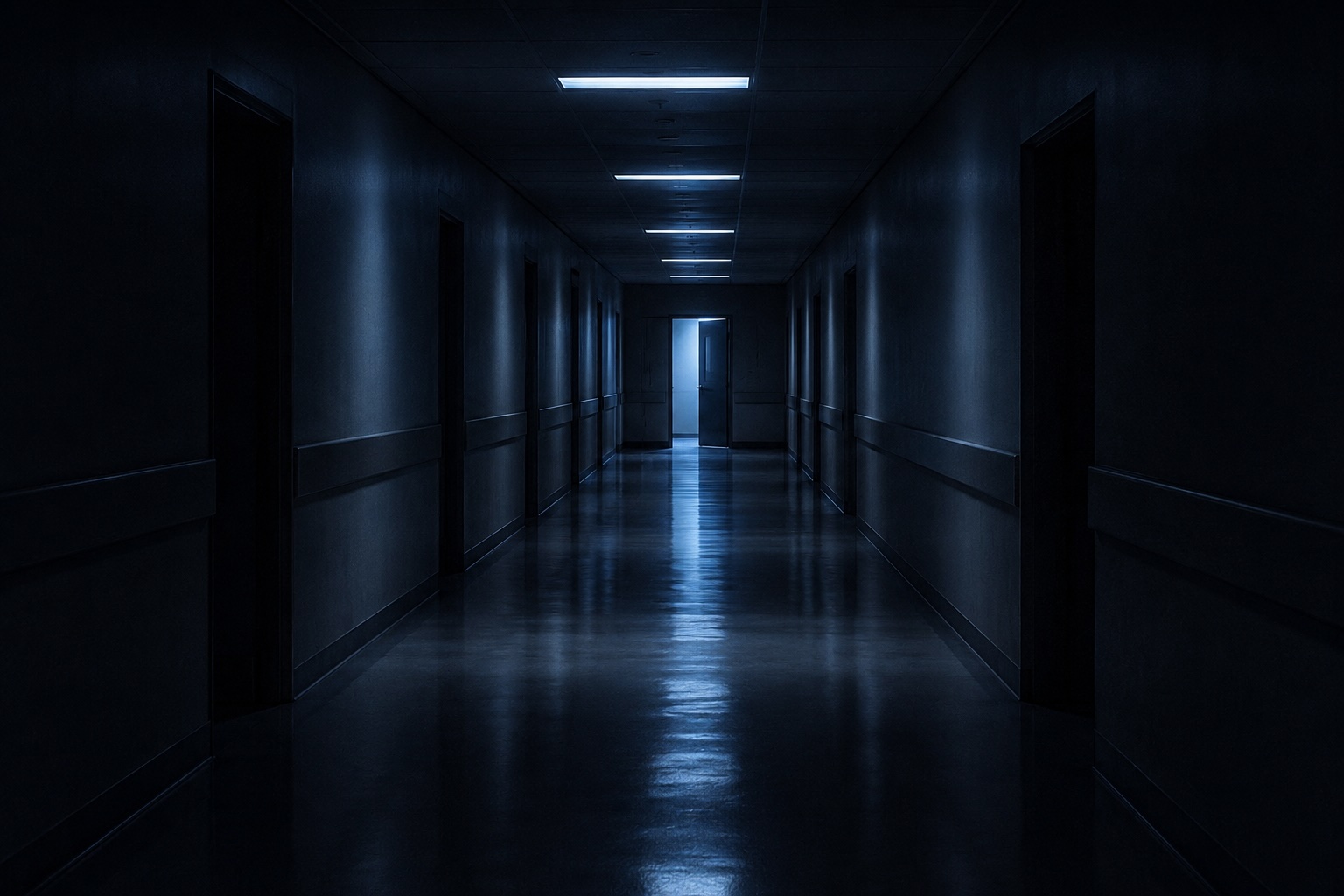
An empty hospital corridor at night, fluorescent strip light overhead, a single open door at the far end. Original imagery for Issue 03.
Momentum · powered by Elysium
Issue 03 · Summer 2026

The
Corridor.

The mile between acute psychiatric care and ordinary life. The mile nobody is paid to walk with you.

From the editor

The mile we walked alone.

There is a stretch of every recovery from a serious mental health episode that the British system does not walk with the patient. It begins on the day the doors of the acute ward close behind them. It continues through the weeks the discharge letter sits in the post. It does not end until the patient has, in their own time and with whatever resources they could find, made the long return to something that looks like ordinary life.

We have a name for that stretch. We call it the corridor.

It is the period in which a patient is statistically at their most vulnerable, and structurally at their most alone. The clinical literature is unambiguous on the first half of that sentence. Suicide rates in the first weeks after a psychiatric discharge are roughly one hundred times the general-population rate. One in seven of all British patient suicides occurs within three months of leaving in-patient care. The pattern has been consistent for two decades.

The structural half of the sentence is harder to write because nobody is supposed to say it. The community team is overstretched. The crisis team is gatekept by thresholds the patient does not meet until they are in crisis again. The GP has nine minutes. The family have been told what happened but not what to do. Into that vacuum, the patient walks home.

This issue is about that walk.

We have spent a month inside the UK literature, the international comparators, and the lived testimony of people who walked it themselves. Two places in the world have built a real corridor. In Trieste in northern Italy the corridor is staffed twenty-four hours a day. In western Finland the corridor is met by clinicians who arrive at the home. Neither model has been adopted in the United Kingdom at scale. Some pilots have begun. None has been allowed to grow into the system.

Momentum is published by The Threshold Collective. The sixth product arm we are building, the Reintegration Programme, is being designed to operate inside this corridor. It is in design, not open to enrolment. We have written this issue not as the launch of a service but as the laying-down of a position: the corridor is real whether or not anybody has built it for you, and if you have walked it alone you should at least be able to read someone say so plainly.

Read it slowly.
Tom Sanders Editor · The Threshold Collective
From the founder

The morning before. The morning after.

A vignette from inside the corridor, in the words of the person who walked it.

The morning before the discharge, I was woken when the ward was woken. There was a tablet. There was a glass of water. There was a meal at a time the ward decided. There was a bathroom you could not use without four men inside arm's length of you, because I was a risk to myself and that was the protocol. The day was structured to the minute. The structure was not consultative. It was protective. It was, for that period of my life, the only thing keeping me alive. The clinicians on that ward were doing the job the country had asked them to do, and they were doing it with care.

The morning after the discharge, I woke up at home. There was no tablet at a set time. There was no meal at a set time. There was no structure. There was no bathroom you could not use alone. There was no one in the room.

There were instructions in an envelope on the kitchen table.

There was a phone number to call if I needed to.

The transition between those two mornings is the corridor.

Nobody walked it with me. I do not say that bitterly. I say it factually. The ward had done its job. The crisis had passed. The next person who was going to need that bed was probably already on the way. The system, in its own terms, was correct to discharge me. The system did not have anywhere to put the person who had just been discharged.

I walked it. I did not walk it well, at first. I learned, over the months that followed, that the disorientation of that first morning was not something I had personally failed at. It was the design. I was not supposed to be eased out of the structure of the ward. I was supposed to absorb the discontinuity. Most people I have spoken to since who lived through it describe the same first morning. The same kitchen. The same envelope. The same phone number they did not call.

I am writing this from the other end of the walk. The Threshold Collective is what I am building now, in part, because the corridor was not walked with me, and because I believe it can be walked with the next person.

This issue is for the people who are about to wake up that morning, and the people who already have.

Tom Sanders Founder · The Threshold Collective
Section 1 of 4 · The state of the corridor

Six numbers UK mental health policy has learned to live with.

Each is sourced. Each points at the same place: the gap between discharge and ordinary life, where the system has decided it can stop walking with the patient.

100×

Suicide rate in the first month after discharge from in-patient psychiatric care, against the general-population baseline. International meta-analysis across forty-eight studies.

Chung et al. · JAMA Psychiatry · 2017

1 in 7

Of all patient suicides under the care of UK mental health services occur within three months of discharge from an in-patient ward.

National Confidential Inquiry into Suicide and Safety in Mental Health · University of Manchester

2 weeks

The post-discharge period in which the highest concentration of patient suicides occurs. The risk is front-loaded in days, not months.

National Confidential Inquiry · annual report

9 min

Average length of a UK GP consultation. The recommended length for a meaningful mental health review, in published clinical guidance, is at least three times that.

BMJ Open · UK general practice consultation length

1978

Year Italy passed Law 180. Asylums closed. Community mental health centres mandated. The Trieste service became a WHO-designated model. Decades before the UK had a national mental health crisis line.

Law 180, Republic of Italy · WHO Collaborating Centre, Trieste

Pilot

Status, in the United Kingdom, of any system-wide implementation of either Trieste-style continuous community coverage or Finnish Open Dialogue. Pilots have run in NHS trusts. No model has been adopted at national scale.

Published NHS pilot literature · Royal College of Psychiatrists

Visualised at scale

What "one hundred times" actually looks like.

GENERAL POPULATION FIRST MONTH POST-DISCHARGE 100× 0 25× 50× 75× 100×

Each pixel of bar length represents one population-baseline unit. The lower bar is one hundred times the length of the upper bar. The figure is the post-discharge suicide rate in the first month, drawn from an international meta-analysis of forty-eight studies covering more than seventeen thousand patient years.

Chung et al. · JAMA Psychiatry · 2017

Read together, the numbers tell a story British mental health policy has spent two decades learning to live with. The first weeks after a psychiatric discharge are the most dangerous in a patient's life. The system the patient is discharged into is not built to walk those weeks with them. Two other countries built that walk. We have not.

Section 2 of 4 · Feature

Where the corridor starts, and what is supposed to be waiting at the other end.

The British psychiatric system is built on the assumption that the crisis is over by the time the patient is discharged. The clinical literature has spent twenty years saying the opposite.

An empty hospital ward corridor at night, single open door, cold fluorescent light.

The discharge from an acute psychiatric admission is the moment the British mental health system formally hands the patient back to themselves. A nurse will have gone through the discharge plan. A care coordinator name will be on the paperwork. There will be a referral letter to the patient's general practitioner. There will be a number for the local crisis team. There will be a follow-up appointment, perhaps in two weeks if the trust is well resourced, perhaps in six if it is not. The doors will close behind the patient. The corridor will begin.

The clinical literature is unambiguous about what happens in the days and weeks that follow. The risk of suicide rises sharply. International meta-analysis across forty-eight studies, published in JAMA Psychiatry in 2017, found the post-discharge suicide rate to be roughly one hundred times the general-population baseline in the first month. United Kingdom data published annually by the National Confidential Inquiry into Suicide and Safety in Mental Health, based at the University of Manchester, finds that around one in seven of all patient suicides under the care of UK mental health services occur within three months of discharge. The largest concentration falls inside the first two weeks.

These are not new findings. They are not contested. Every UK consultant psychiatrist working today knows them. The Royal College of Psychiatrists has made post-discharge follow-up a focus of clinical standards for years.

What is supposed to be waiting at the other end of the discharge is community mental health. The community mental health team, in theory, picks the patient up. The crisis team is, in theory, available if anything destabilises. The GP, in theory, is the steady hand week to week.

The theory rarely holds.

The most dangerous period in a psychiatric patient's life is the week the system stops watching.

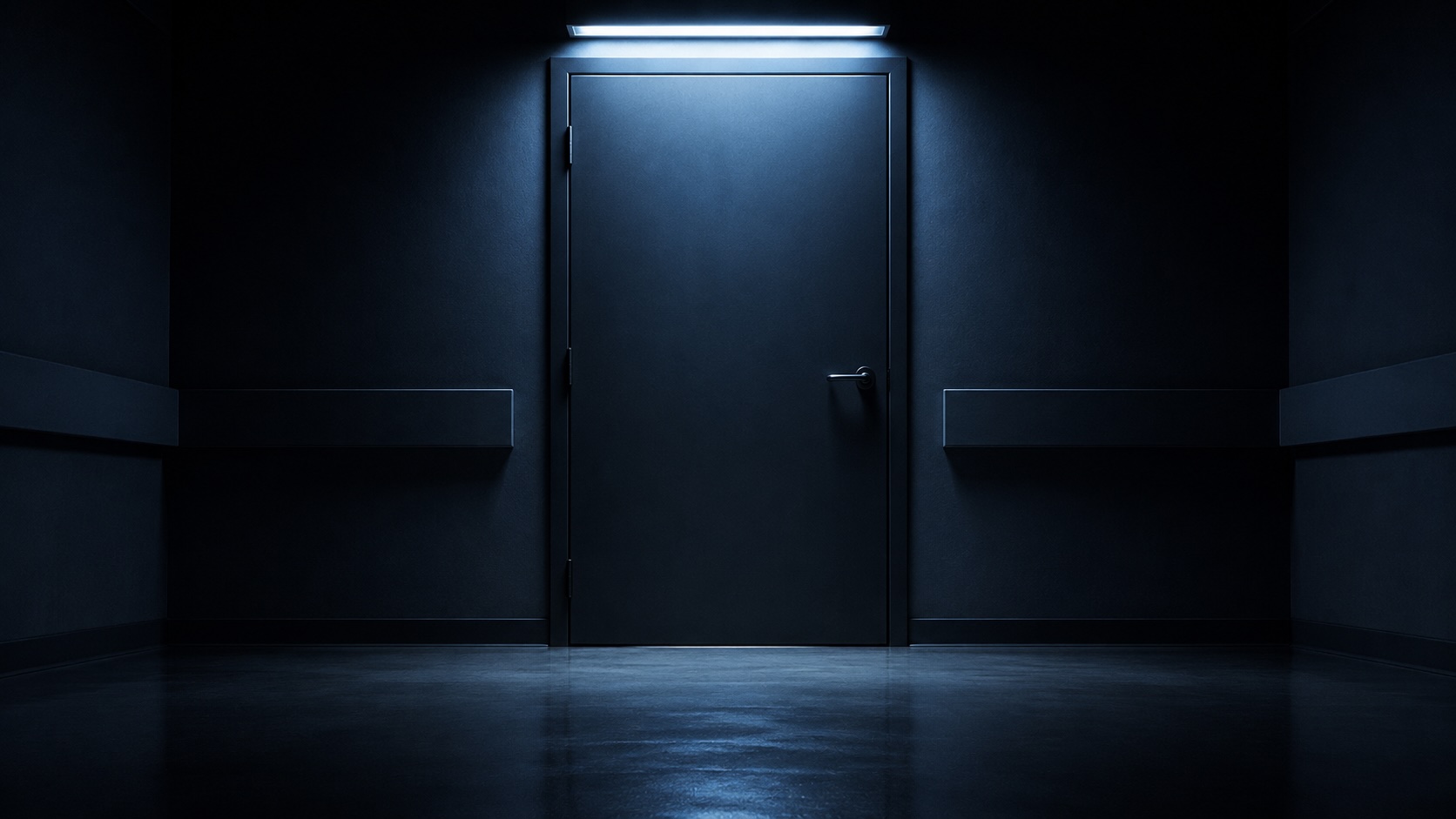
A single closed ward door, dim corridor light catching the edge of the frame.

Community mental health teams in England have, for years, carried caseloads the Royal College of Psychiatrists has consistently described as unsafe. The most recent workforce census shows persistent vacancies in consultant psychiatry posts across multiple regions. A meaningful follow-up call to a recently discharged patient is the kind of clinical contact that requires time. Time is the resource the teams do not have.

Crisis teams, originally designed to provide intensive home-based treatment as an alternative to admission, increasingly operate as gatekeepers rather than walkers-with. Access thresholds have risen. The team is, very often, the door the patient is told to knock on if things get bad again. Knocking on it requires the patient to recognise that things are bad again, in time, alone.

The general practitioner is the most reliable point of contact for most discharged patients, and the least equipped to be the corridor's only walker. The average length of a UK GP consultation is approximately nine minutes. The clinical guidance for a meaningful post-discharge mental health review is, in published primary-care literature, at least three times that. The numbers do not reconcile.

The family, in most cases, has been told what happened in clinical language they do not yet have the vocabulary to respond to. They have not been told that the first fortnight is the highest-risk fortnight. They have been told to call 999 if there is an immediate emergency. They have not been told what an unfolding emergency looks like before it is immediate.

Into that vacuum, the patient walks home. Most adjust, often through sheer effort and the people closest to them. Some do not. Closing the gap between the most and the some is what the rest of this issue is about.

Section 3 of 4 · Feature

Two countries have built the corridor. The United Kingdom has not.

In northern Italy and western Finland, the corridor is staffed by clinicians whose job is to walk it. Neither model is exotic. Both have been published, peer-reviewed, and visited by NHS teams. Neither has been allowed to grow.

An empty waiting-room with two chairs facing each other, low evening light through a window.

The Italian word is dipartimento. The English would be department. In Trieste, the city's dipartimento di salute mentale, the department of mental health, has been running an unusual experiment for almost half a century. The experiment is that the corridor between acute crisis and ordinary life is not the patient's responsibility. It is the department's.

The architecture is plain. Four community mental health centres, each covering an area of about sixty thousand people. Each centre is open twenty-four hours a day. Each has beds for short stays. Each has a multi-disciplinary team that knows the catchment and the patients in it. Acute episodes can be held without an admission to a psychiatric hospital, because the centre is, in effect, the alternative to the hospital. The discharge from a hospital, where one is necessary, is the discharge into a place that already knows the patient. There is no separate community team to refer to. There is no waiting list between the ward and the community. The corridor is the centre.

The model dates to 1978, when Italy passed Law 180, also known as the Basaglia Law after the psychiatrist who drove the reform. The law closed Italy's asylums. The country was, in effect, instructed to invent community mental health from scratch. Trieste's department took the instruction at the architectural level and held it. The World Health Organization designated the Trieste service a collaborating centre in 1987. International delegations visit. The NHS has sent its own.

The published outcomes are not perfect. Italian psychiatric reform has variable application across the country, and Trieste is at the strong end of a wide distribution. What is striking, when read against the UK figures, is not Trieste's outcomes in isolation. It is that the corridor itself, in Trieste, has been treated as a clinical space worth staffing.

The corridor in Trieste is staffed. The corridor in the United Kingdom is signage.

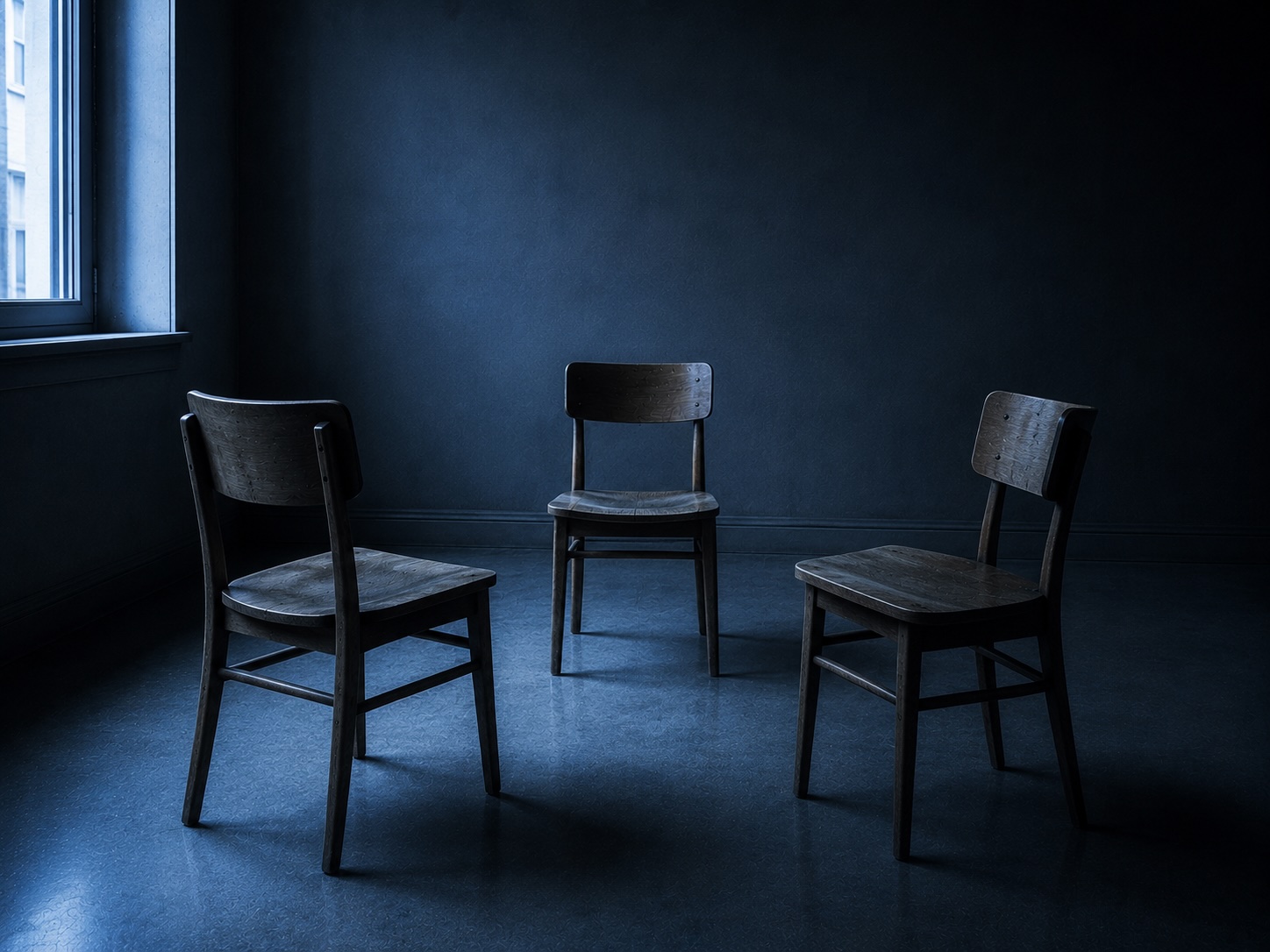
A row of three empty wooden chairs arranged facing each other, low side light.

In western Finland, in a region called Lapland, a different model addresses a different version of the same problem. The model is called Open Dialogue. It was developed at Keropudas Hospital, near the city of Tornio, from the mid-1980s onwards, by a multi-disciplinary team led by the psychologist Jaakko Seikkula and colleagues. Its central premise is that the unit of treatment is not the patient. It is the social network around the patient.

When a person in the catchment area presents in crisis, an Open Dialogue team meets the person, the family, and the people close to them, often in the home, usually within twenty-four hours. The conversation is the work. The clinicians do not retreat to a clinic to formulate a plan and return with it. The plan is built in the room, with the network, repeatedly, in dialogue rather than monologue. Decisions about medication, hospitalisation, and follow-up are made transparently. The corridor, in this model, is also the room.

Open Dialogue has been studied in the Finnish region of origin and replicated, with adaptation, in trial settings in Scandinavia, the United States, Germany, and the United Kingdom. The peer-reviewed outcomes from Lapland are unusual. Rates of first-episode psychosis returning to long-term medication, returning to hospital, or remaining out of work have been published below the rates seen in most comparator regions. The model has been studied by the NHS. A multi-site UK trial called ODDESSI was led by University College London and ran across several trusts. Results have been mixed and contested. The model has not been adopted at scale.

Neither Trieste nor Lapland is a finished argument. Both face their own constraints. Both have had to fight, in their own systems, for the funding, the workforce, and the political cover to keep going. What both demonstrate, in entirely different national contexts, is that the corridor can be designed. It is not a clinical impossibility. It is a budgetary, structural, and professional preference.

The British preference has been to write the discharge letter and close the door.

Section 4 of 4 · Voice

Four British accounts of the days after the worst day.

Four public testimonies, each on the record, each properly cited. None of them describes the corridor as having been walked with them. All four describe walking it.

A single bench in low side light, the suggestion of someone who has just left.

Matt Haig published Reasons to Stay Alive in 2015. It is, in part, an account of a near-fatal mental breakdown at the age of twenty-four and the years of recovery that followed. He writes about the period after the worst as a time he had to work through largely on his own, with the support of his partner and his family but with very little in the way of structured clinical follow-up. The book sold more than a million copies in the United Kingdom. The fact that the book had to exist at all is part of the case being made in this issue. The country needed a writer to do the work the system did not.

Matt Haig · Reasons to Stay Alive · Canongate, 2015

Bryony Gordon has written, in The Telegraph and in her books Mad Girl and The Wrong Knickers, about obsessive-compulsive disorder, bulimia, addiction, and the periods of life in which she was at her most unwell. Her account of what happens after the immediate crisis passes, and of the unglamorous and uneven nature of recovery, has been one of the most consistent public corrections of the redemption-arc narrative the British press tends to prefer. She founded Mental Health Mates, a walking group that meets in cities around the country, in part because the conversation the corridor required, in her experience, did not exist inside the clinical system.

Bryony Gordon · Mad Girl · Headline, 2016 · and ongoing Telegraph columns

Alastair Campbell has spoken and written, across more than two decades, about his breakdown in 1986 and the long arc of recovery that followed. His public account is unusual for its specificity about the practical infrastructure he relied on: a partner who refused to leave, a long-standing psychiatrist, a small set of friends who knew the inside of the experience. He has been consistent, in print and in interview, about a single point. He did not come back because the system caught him. He came back because the people closest to him did.

Alastair Campbell · Living Better and public interviews · 2020 and ongoing

Frank Bruno's account of being sectioned in 2003 and the years after has been told in his autobiography Let Me Be Frank and in repeated public interviews. He has been blunt about the inadequacy of the support he had on discharge, and about the contribution of medication side-effects, weight gain, and the loss of structure to the bipolar episodes that followed. He has founded a charity in his own name to fund non-medical mental health interventions for adults. He has been particularly clear that the discharge moment, for him, was not the end of anything. It was the start of years.

Frank Bruno · Let Me Be Frank · Mirror Books, 2017 · and public interviews

Read together, what these accounts have in common is not the substance of what each writer went through. It is the shape of how each came back. None describes a corridor that was walked with them by the clinical system. All describe a corridor walked with people they were lucky enough to have close. The unwritten account is the account of the people who did not have that luck.

That is what the next section is about.

Closing essay

What the corridor requires.

Three things, in order, build a corridor a patient can walk. None of them are exotic. All of them are absent from the standard British discharge package.

Three figures, seen from behind, walking a quiet road into low morning light. Companions, not patients.

A corridor that has been built operates on three principles, in order. None is invented. All have been written about, piloted, and described in the published clinical literature for decades. The reason the corridor remains unbuilt at scale in the United Kingdom is not that the principles are unknown. It is that they have not been adopted as the architecture rather than as the rhetoric.

The first principle is stabilisation. The first weeks after a discharge are not the time for breakthrough work. They are the time for the basic floor that has to hold before anything else is possible: sleep, nutrition, the regulation of the nervous system, a daily structure the patient can keep, a medication review with a prescriber who knows the case. Most British discharge protocols assume this floor exists by default and move on to other things. It almost never does. A patient leaving an acute ward is rarely sleeping, rarely eating, rarely on a stable medication regime they trust. The corridor begins with the floor.

The second principle is language. A discharged patient leaves the ward with a diagnosis written by clinicians for clinicians. They do not leave with a personal account of what has happened to them. The construction of that account, in words that respect the patient's intelligence and that hold up when they are spoken to a partner, an employer, or a friend, is part of the recovery, not adjacent to it. Without language, the patient cannot describe what is happening to a GP in nine minutes. They cannot say what they need to a manager. They cannot make sense of what they themselves are living through. With language, the rest of recovery becomes possible.

Stabilisation, language, relationships. None of which is invented. All of which is missing.

The third principle is relationships. The work of recovery from a serious mental health episode is, finally, relational. The relationships that survived the acute episode, the ones that did not, the ones that have to be rebuilt on different terms. This is the work that produces the only outcome worth producing: a person who can hold their own life again. It cannot be done in a nine-minute appointment. It cannot be done by an app. It is done in facilitated groups, under clinical supervision, with peers who have walked similar corridors, over time.

Trieste's department, in northern Italy, does this through the structure of its community centres. Open Dialogue, in western Finland, does this through the network meetings held in the patient's home. Crystal Palace's foundation, on a Wednesday night in south London, does a version of it through a football team for adults living with mental health challenges, partnered with Mind in Croydon. Each of those programmes looks different. Each operates on the same three principles. Stabilisation. Language. Relationships.

The Threshold Collective, the organisation that publishes Momentum, is designing a programme called the Reintegration Programme around these three principles. The programme is in design. It is not open to enrolment. We are publishing this issue not as the announcement of a service but as the laying-down of a position. The corridor is real whether or not we have finished building the programme. The people inside it deserve to read someone say so plainly, and to read what would need to be true for the corridor to be walked with them.

None of which is enough on its own. The corridor will be built, when it is built, by clinicians, by community teams, by peer-support workers, by family members, by employers, by patients themselves, and by the policy decisions that fund or refuse to fund the redistribution. A magazine cannot build it. What a magazine can do is name the corridor, plainly, in language that holds, so the people with the power to staff it can no longer say they did not know it was there.

That is the brief.

Colophon · Issue 03 · Summer 2026

Sources, credits, and the long list of people whose work this issue stands on.

Masthead

Editor
Tom Sanders
Chairman
Kerl Haslam
Publisher
The Threshold Collective
Issue
03 · Summer 2026
Title
The Corridor
Series
Momentum, powered by Elysium

Photography

Direction
Tom Sanders, Editor
Generation
Original imagery produced for Issue 03 under editorial direction
Cover
The corridor, the open door, the cold light
Section 2
The ward door, the moment after the doors close
Section 3
Two chairs facing each other, low evening light
Inline
Three chairs in dialogue, the unit of care
Voice
The bench, the suggestion of someone who has just left
Closing
Three figures walking a road into low morning light

Sources cited

  • Chung, D. T., Ryan, C. J., Hadzi-Pavlovic, D., Singh, S. P., Stanton, C., Large, M. M. Suicide rates after discharge from psychiatric facilities: a systematic review and meta-analysis. JAMA Psychiatry, 2017.
  • National Confidential Inquiry into Suicide and Safety in Mental Health (NCISH). Annual report on suicide by people in contact with UK mental health services. University of Manchester, most recent edition.
  • Royal College of Psychiatrists. Workforce census and clinical standards on post-discharge follow-up.
  • BMJ Open. International variations in primary care physician consultation time. Cited for the nine-minute UK GP consultation length figure.
  • Republic of Italy. Law 180 (Basaglia Law), 1978. Cited for the closure of asylums and the mandate for community mental health centres.
  • World Health Organization. Trieste Department of Mental Health, WHO Collaborating Centre designation. 1987 and subsequent.
  • Seikkula, J., and colleagues. Five-year experience of first-episode non-affective psychosis in open-dialogue approach. Psychotherapy Research, 2006 and subsequent publications.
  • ODDESSI trial (Open Dialogue, Development, Evaluation, and Scalability for Severe and Stigmatised Illness). University College London, multi-site UK NHS trial.
  • NHS England. NHS 111 option 2 national mental health crisis line. Launched 2024.
  • Matt Haig. Reasons to Stay Alive. Canongate, 2015.
  • Bryony Gordon. Mad Girl. Headline, 2016. The Wrong Knickers. Headline, 2014. Ongoing Telegraph columns.
  • Alastair Campbell. Living Better. John Murray, 2020. Public interviews across two decades.
  • Frank Bruno. Let Me Be Frank. Mirror Books, 2017. Public interviews.
  • The Threshold Collective. The Reintegration Programme. In design, not yet open to enrolment. thethresholdcollective.co.uk/reintegration

Read Momentum.

Momentum is the publication of The Threshold Collective. We write when we have something specific to say, sourced and signed. The Room is the membership the publication is delivered through. Cancel one click, any time.

Visit thethresholdcollective.co.uk